Edward Jones image readiness system
Financial services · Historical work
More than 2,000 images.Five required crops each.One searchable system.
A production and metadata workflow prepared approved photography for reliable use across Marketing Hub templates when the vendor platform could not automate the required crop families.
Approved source
Five template ratios
- 01 · 4:3Landscape marketing template
- 02 · 4:5Vertical marketing placement
- 03 · 1:1Square social placement
- 04 · 3:2Editorial landscape
- 05 · 2:1Wide campaign header
Role
Senior Production Designer
Image production & systems
Documented scale
2,000+ source images
five crops per image
Implied output
10,000+ individual crops
prepared for templates
Markets supported
United States & Canada
branch-level template use
Case study summary
The platform could not automatically turn one approved photograph into five useful compositions for five template ratios.
Reviewed more than 2,000 images, produced each crop family, completed requested edits, and added retrieval metadata.
Made approved imagery easier to find and safer to reuse across U.S. and Canadian template programs.
The crop family
One photograph; five decisions
A crop is a composition, not a file conversion.
Each ratio changes the available space, the subject's scale, and the visual emphasis. The work required five intentional crops that stayed related while serving different templates.

4:3
Landscape marketing template

4:5
Vertical marketing placement

1:1
Square social placement

3:2
Editorial landscape

2:1
Wide campaign header
Representative ratios demonstrate the real production method. Exact template specifications and Edward Jones source photography are not reproduced here.
The resource in use
One library, many marketing contexts
A useful image library had to anticipate the work before the work was built.
The Marketing Hub supported far more than one template family. Postcards, speaking materials, social content, thought leadership, banking resources, and integrated campaigns all needed approved imagery that could be found quickly and placed correctly.
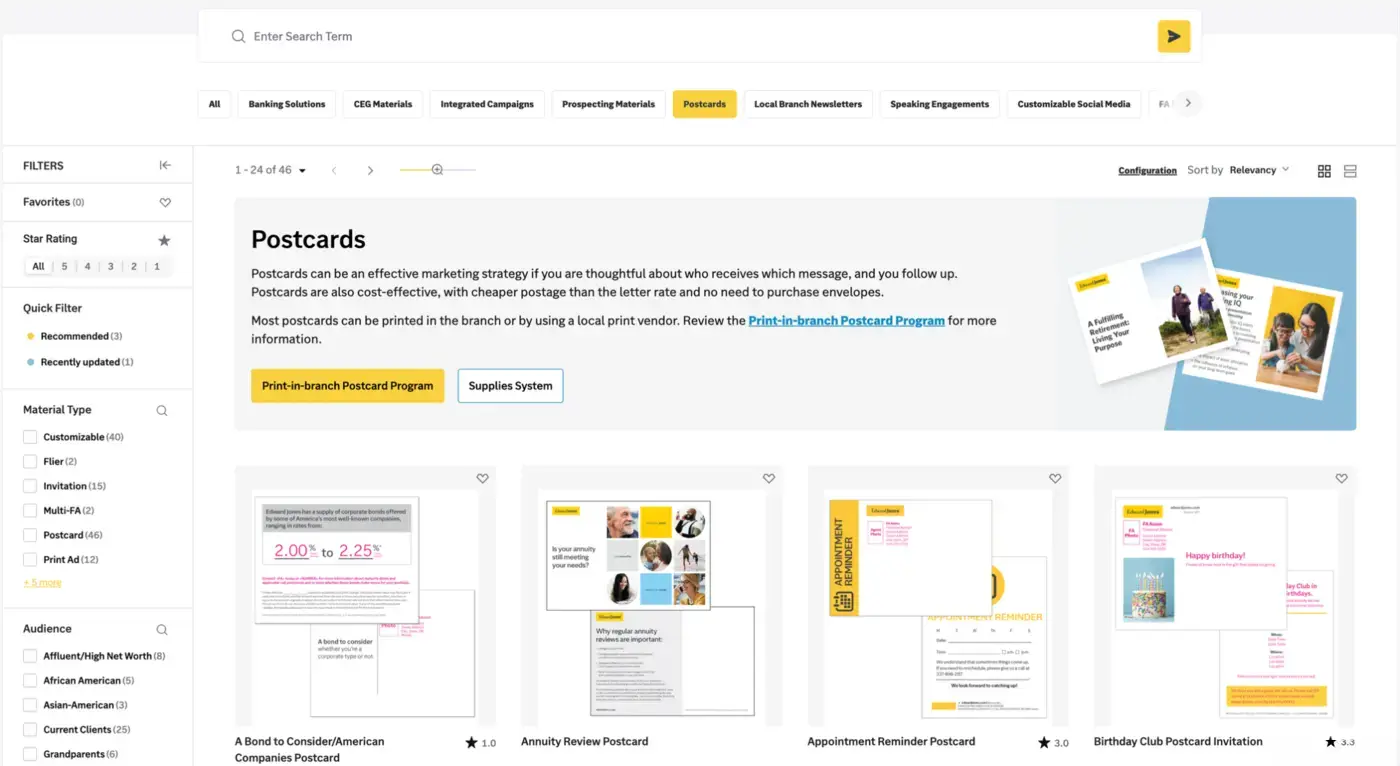
Postcards
Direct mail and branch outreach
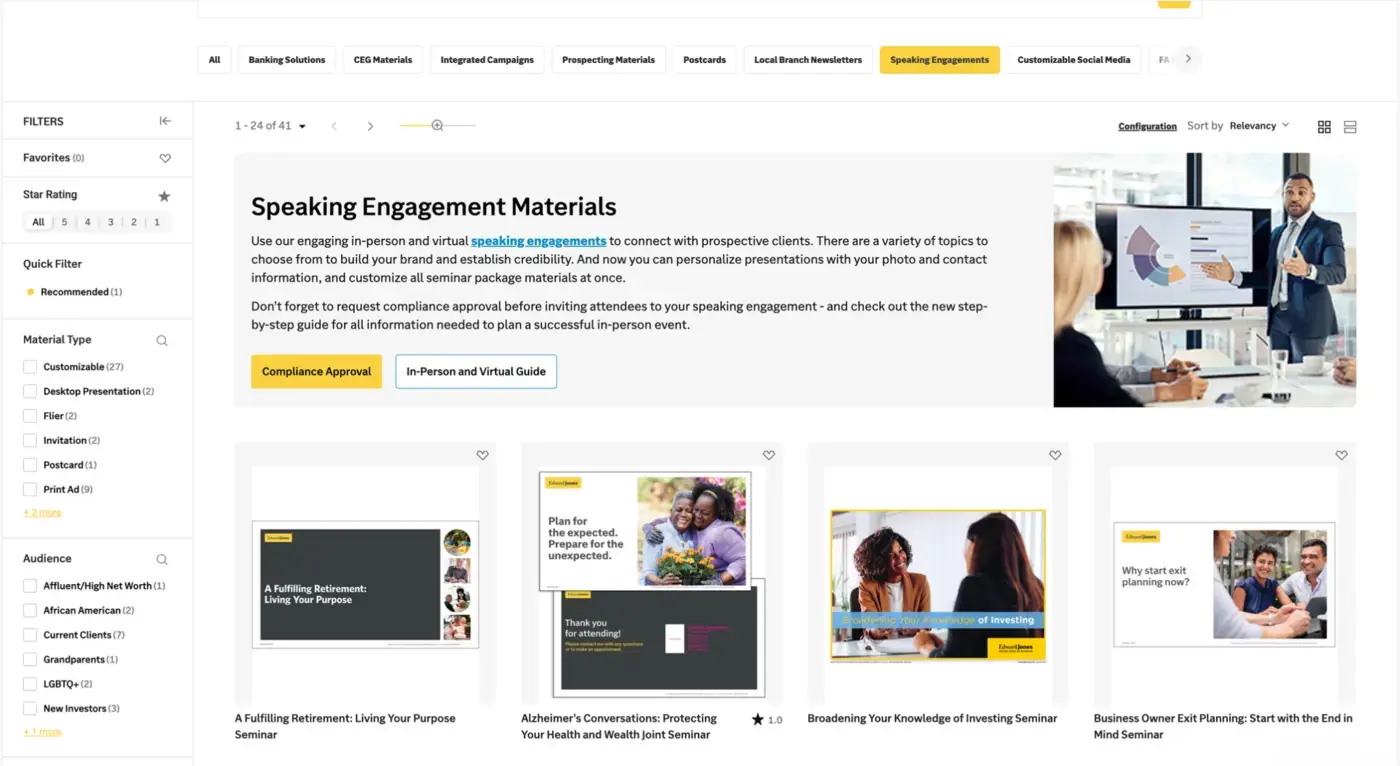
Speaking engagements
Presentation support and follow-up
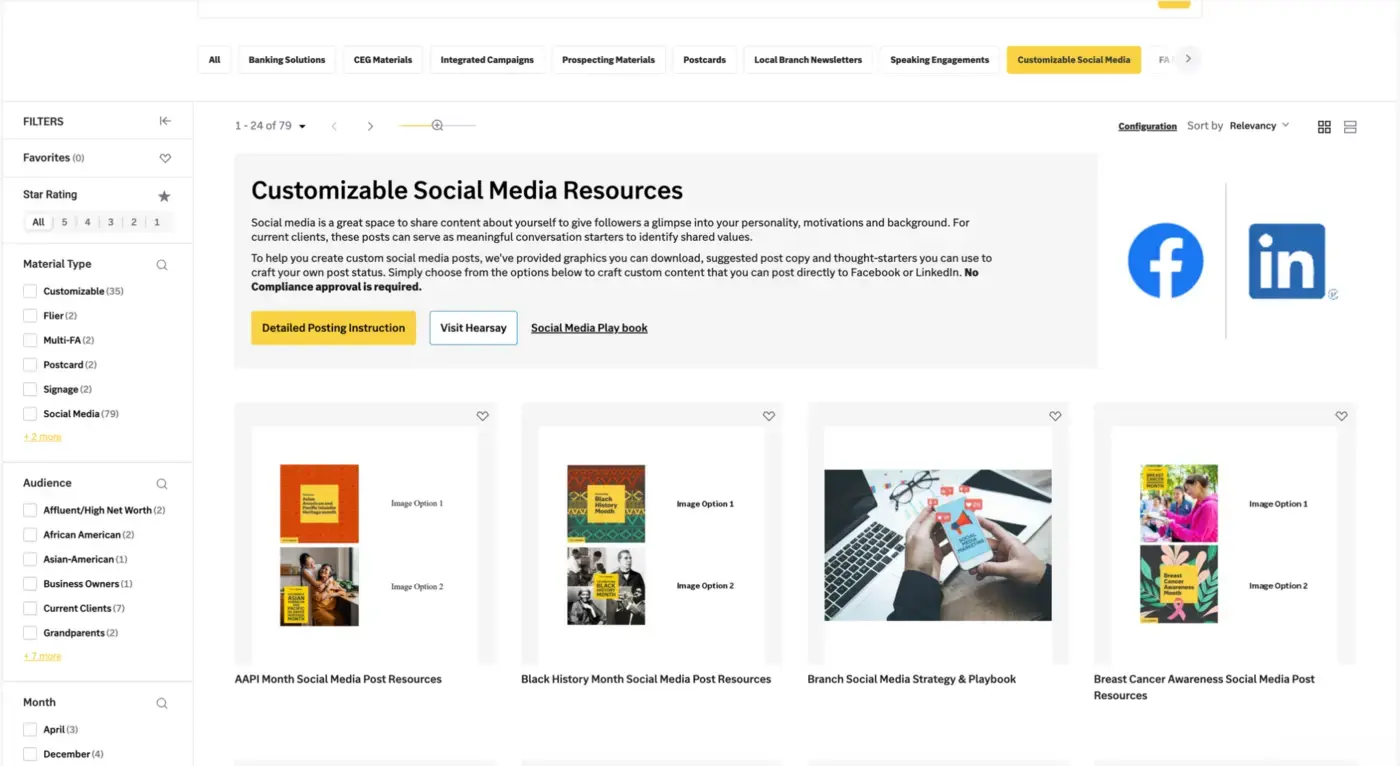
Customizable social media
Channel-ready social content
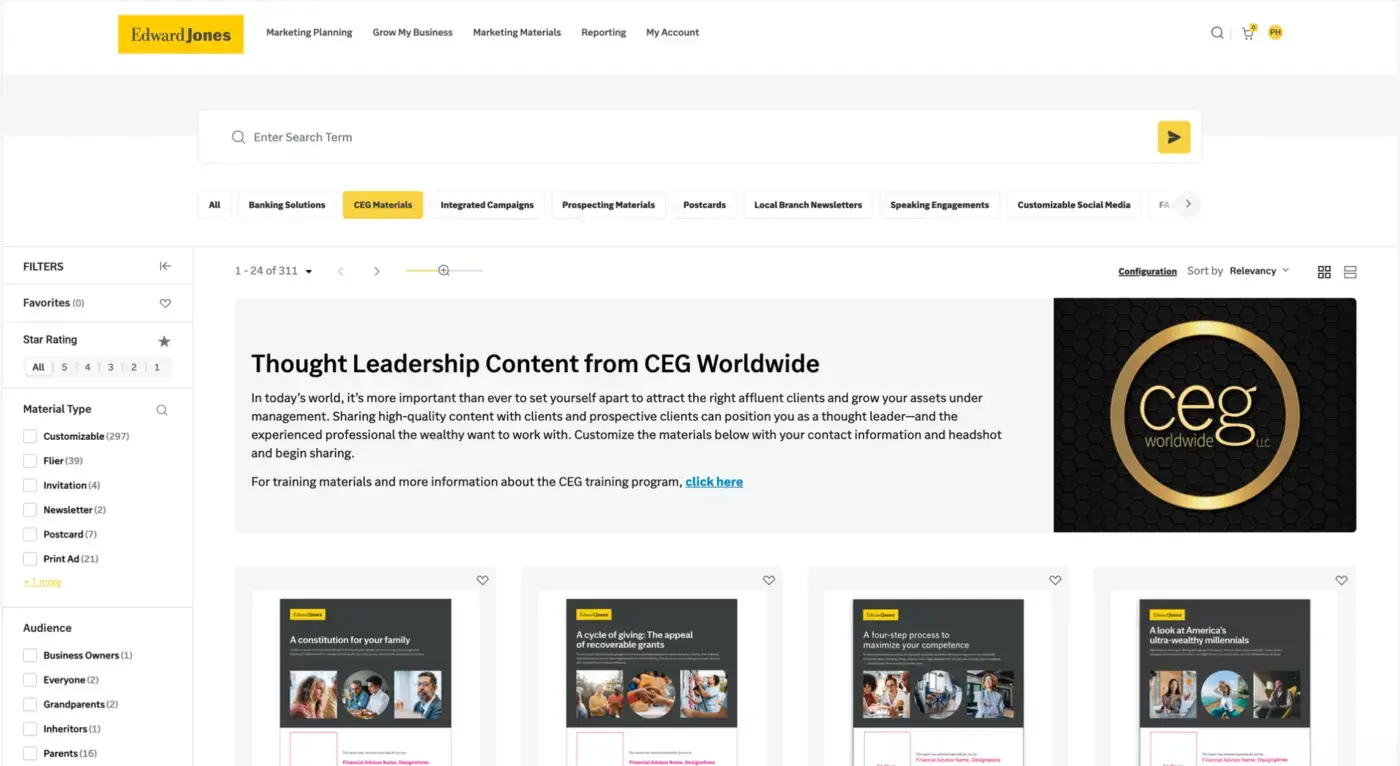
Thought leadership
Affluent and specialized audiences
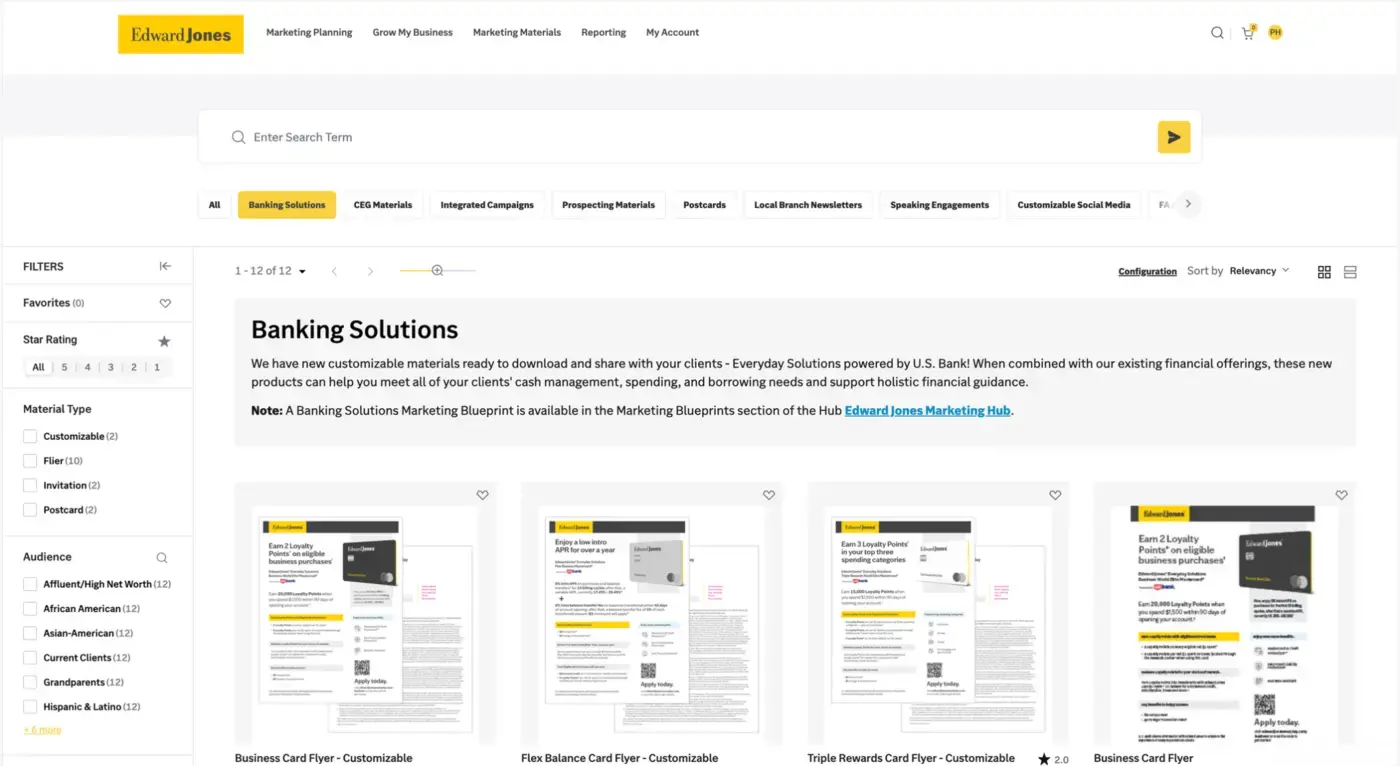
Banking solutions
Product and service education
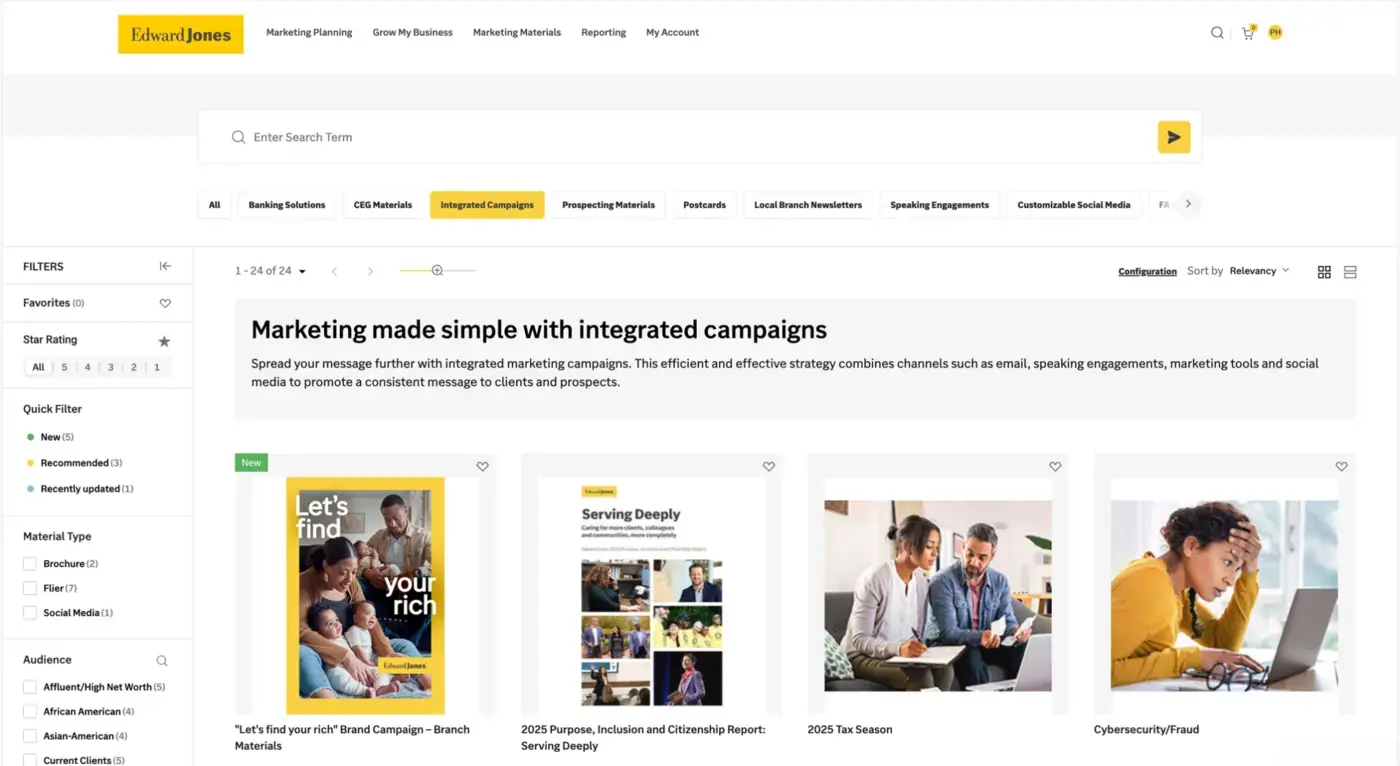
Integrated campaigns
Coordinated use across multiple channels
Why the resource mattered
Consistency across two markets; relevance at the local level.
Edward Jones served financial advisors in both the United States and Canada through a shared Marketing Hub. The library gave that system a governed visual foundation: approved imagery, prepared crop variants, and metadata that made the right asset easier to retrieve for a particular audience, topic, or channel.
Without image readiness
- Unusable automatic crops
- Repeated production work
- Slow, uncertain retrieval
- Inconsistent local output
With image readiness
- Complete crop families
- Searchable metadata
- One governed source
- Template-aware selection
This production resource did not create Edward Jones' international growth by itself. It reduced a critical source of friction and helped make locally adaptable marketing more reliable at scale.
The need
Where automation stopped, image production began.
BrandMuscle, the platform vendor at the time, could not automatically create the five purposeful crops required by the template system. A generic center crop would have cut off subjects, weakened compositions, and produced inconsistent results. I reviewed the library image by image and built the missing crop families manually.
When an approved image needed more than reframing, I completed art-directed retouching or extended its background in Adobe Photoshop, including generative tools when appropriate. The goal was not cosmetic variation; it was a usable image that remained credible in every required format.
2:1
4:5
How it worked
From source to retrieval
The image family carried production intelligence with it.
Preparing the pixels was only one part of the system. Every crop also needed a clear relationship to its source, its intended format, and the templates it could support.
Review the source
Check subject, resolution, rights, retouching needs, and likely template uses.
Refine or extend
Correct the image and extend backgrounds when the required composition needs more room.
Compose five crops
Reframe the same photograph deliberately for each template ratio instead of relying on a center crop.
Tag the family
Add crop, subject, topic, and use metadata so related files stay grouped and searchable.
Connect to templates
Coordinate repository and platform flags so users can retrieve the correct crop for the selected format.
Search and retrieval
The operational layer
The image file was only half the asset.
I worked with BrandMuscle to explain how image families could be grouped and flagged for retrieval inside the templates. In parallel, I coordinated with the Edward Jones media manager to place the files in a central repository.
Metadata made the library usable. Teams could filter by crop or search the descriptive information attached to each photograph, then select the version prepared for the template they were building.
Crop · 4:3Topic · PlanningStatus · Approved
IMAGE FAMILY 01842
Financial professional
- Crop
- 4:3 landscape
- Use
- Template ready
- Family
- 5 linked crops
- Status
- Approved
My role & decisions
Production judgment became system infrastructure.
I supplied the hands-on image work and connected it to the operational decisions that made the files useful later. The process bridged art direction, Photoshop production, metadata, repository management, and vendor implementation.
Protect the subject
Compose each ratio around the person, gesture, and usable negative space instead of accepting an automatic crop.
Finish the family
Make retouching and background extensions hold together across all five outputs, not just one preferred format.
Make retrieval visible
Use metadata and crop flags to communicate which file belongs to which template need.
Coordinate the handoff
Align the central repository, vendor platform, and internal media workflow around the same image-family logic.
I did not own the BrandMuscle software or its product strategy. My contribution was the image-production system, crop library, metadata, and implementation guidance that helped the platform serve the Marketing Hub templates.
Results
07 · Result
Every approved image became easier to find, safer to place, and ready for the format it had to serve.
The structure established during my tenure became the basis for organizing and retrieving template-ready imagery within the Marketing Hub. It filled a practical automation gap and gave future additions a repeatable model.
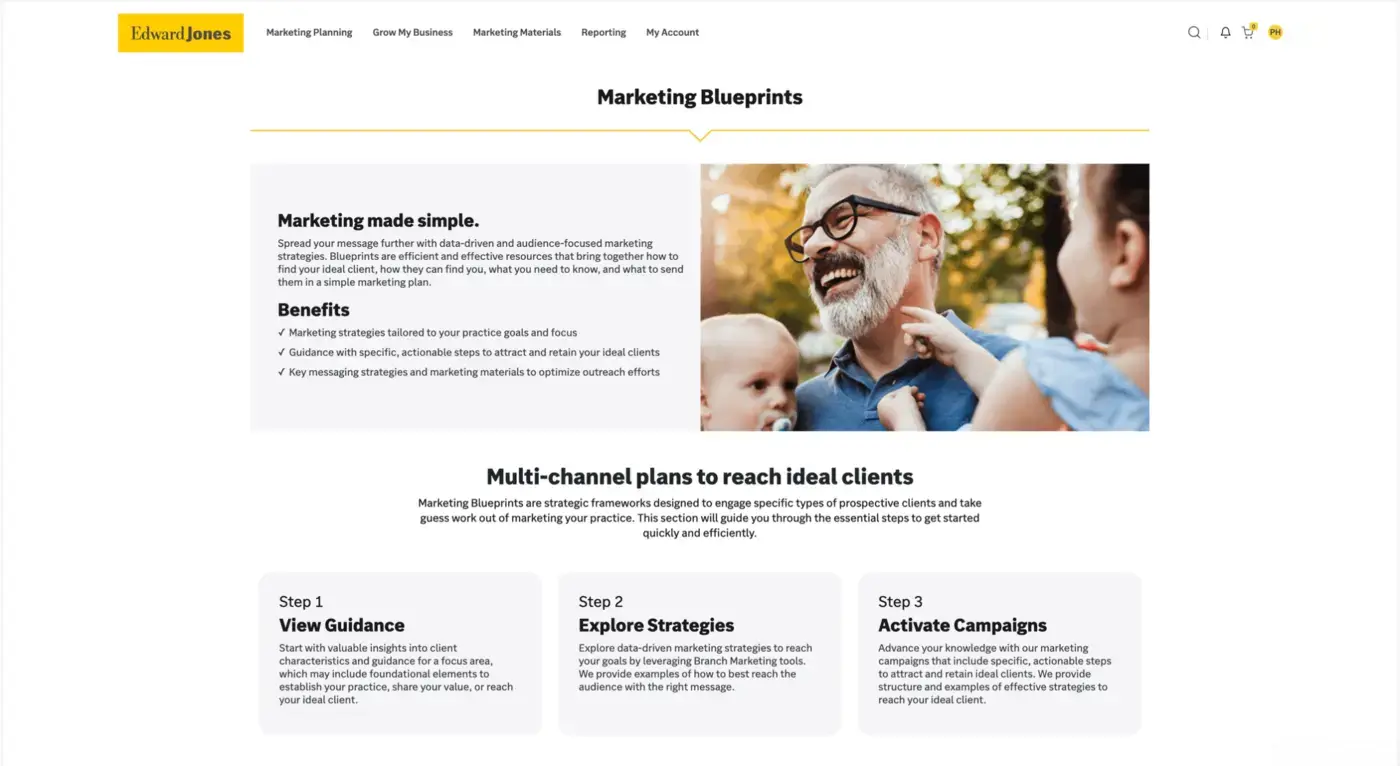
Marketing blueprintsPlanning guidance connected strategy to available materials
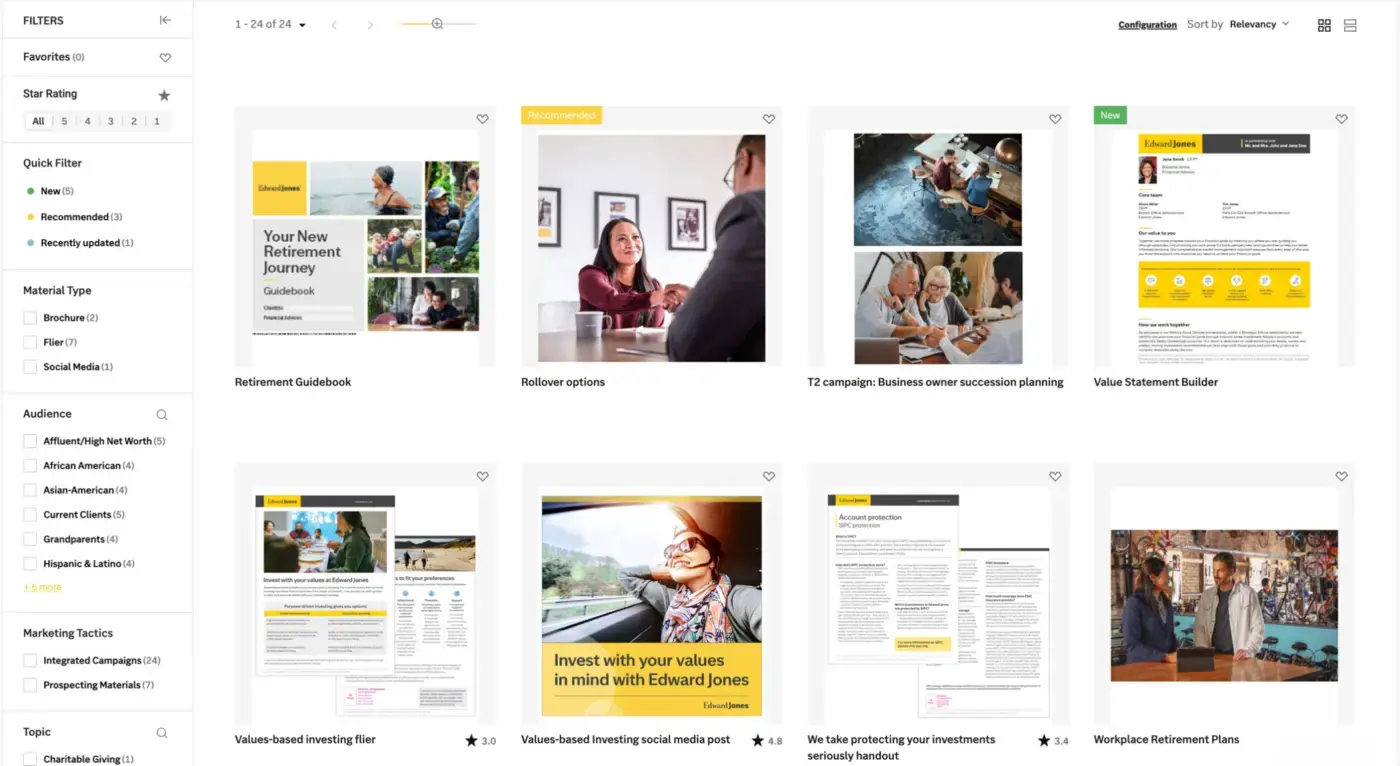
Resource libraryA broad inventory supported different channels and client needs
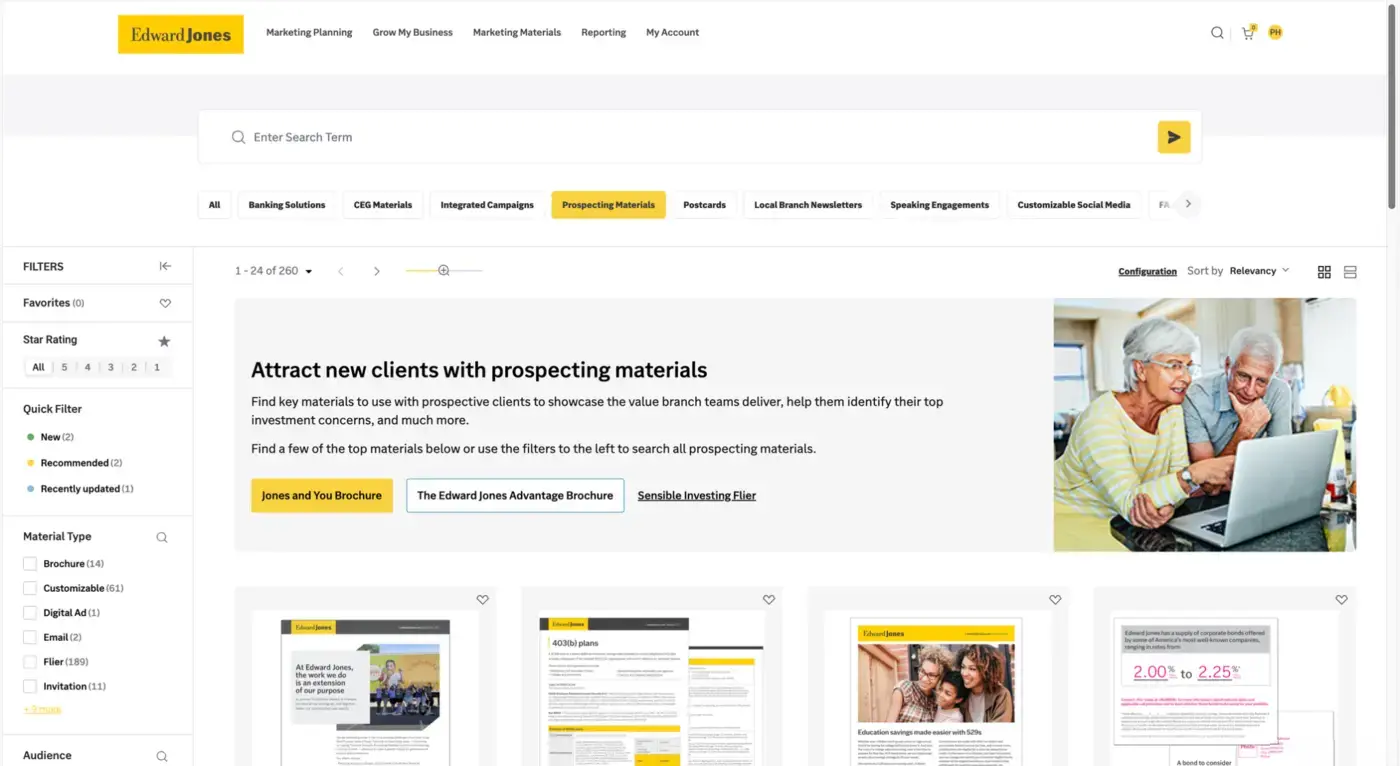
Prospecting materialsAudience filters helped branches find relevant, approved work